If you live in the USA: instead of guessing, you can view a report via ZIP code and make an informed decision.
Receive my free report via ZIP code
Contents
- Potable is not the same as optimal
- What might be in tap water (explained simply)
- The smartest way to start in the USA: report via ZIP code
- What to do with your report (no impulse buying)
- Practical signs: what your home is already telling you
- Frequently Asked Questions
- Your next step
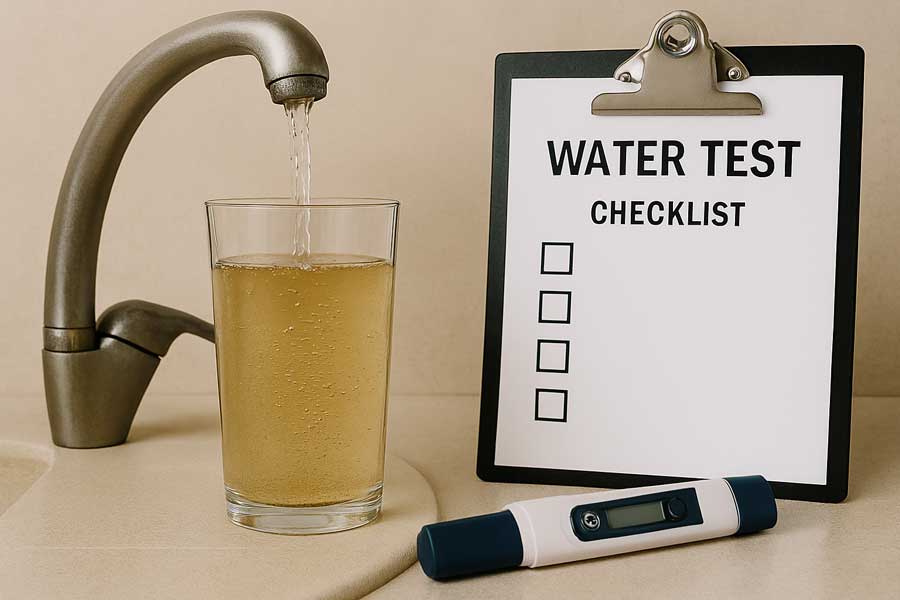
Pour a glass of tap water. Look at it: clear, “normal.” And now for the awkward moment: just because it looks good doesn’t mean it’s “clean” in the way you think.
In the United States, tap water is generally potable (meets the standard). Perfect. But “potable” is the legal minimum, not necessarily the “optimal” standard that many families want for drinking, cooking, making coffee, or filling their school water bottle without playing a game of chance.
We’re not going to scare you here. We’re going to do something much more useful: give you clarity. And if you live in the USA, we’ll take you directly to a practical step: viewing your report by ZIP code.
1) Potable is not the same as optimal.
Most municipal systems do a serious job: they collect, treat, and disinfect water. But there are two realities that coexist:
- Your water varies depending on the area (city, neighborhood, source, treatment).
- What comes out of the treatment plant isn’t always the same as what reaches your glass (pipes, tanks, internal plumbing, sediment).
That’s why families living in the same city have opposite experiences: one feels the water is “fine,” another notices a strange smell or taste, or has constant distrust. You’re not crazy. You’re observing real variables.
Key idea: The law defines the minimum acceptable level. Your family decides the standard.
2) What might be in tap water (explained simply)
No unnecessary technical jargon. Just a mental map to help you decide.
Disinfectants (chlorine or chloramines) and byproducts
Used to protect you from microbiological problems. Good. The downside: odor/taste and, in some cases, disinfection byproducts (for example, total trihalomethanes, known as TTHMs).
Metals (from pipes and infrastructure)
Here comes the classic one no one wants: lead. Sometimes the critical point isn’t the treatment plant, but the route: pipes, connections, solder joints, and the plumbing in the building/house.
PFAS (“forever chemicals”)
These are persistent industrial compounds that have received attention due to their presence in some areas. It’s not cause for panic. It’s about knowing if they appear in your area.
Nitrates
They can be more relevant in certain regions due to agriculture/runoff. Again: the issue isn’t the rumor. It’s the data.
The invisible things that change your routine
Even if you don’t learn acronyms, there are practical signs: a strong, pool-like smell, a “pipe” taste, limescale/stains, or that distrust that makes you buy bottled water “just in case.” That’s not paranoia: it’s a lack of information.
3) The smartest way to start in the USA: view your report by ZIP code
This is where most people get bogged down… and end up doing nothing. If you live in the United States, the most logical thing to do isn’t to argue about whether the water “is good.” The logical thing to do is to view the report by zone.
At Indalo Water, we have a system so you can see what commonly appears in your area (for example: lead, PFAS, nitrates, TTHMs, and other parameters), with a clear explanation and recommendations. You receive it by email.
Your Step #1 (2 minutes)
Receive my free report via ZIP code
First, clarity. Then, decisions. No fuss.
In simpler terms: instead of guessing, you see the data. And with the data, you decide.
4) What to do with your report (without impulse buys)
Receiving a report doesn’t mean “run out and buy the latest filter.” It means you can now choose a level based on your situation.
- Level 0: Confirmation. Everything looks good → perfect. Your action can be to “change nothing,” consciously.
- Level 1: Practical adjustment. If the main problem is smell/taste, you improve the point of consumption.
- Level 2: Serious filtration. If you want more control and consistency for drinking and cooking.
- Level 3: Complete purification + mineral profile. If your priority is to resolve the issue once and for all (and stop thinking about it every week).
The goal isn’t to obsess. The goal is to regain control and peace of mind.
5) Practical Signs: What Your Home Is Already Telling You
Before making any decisions, take a look at your surroundings. Your home often speaks volumes:
- Strong smell (chlorine/pool) when you turn on the tap.
- Coffee or tea with a strange or metallic aftertaste.
- Limescale buildup in kettles and faucets, recurring white stains.
- Dry skin/hair (not always due to water, but it can be a factor).
- “Just in case” bottled water: you buy water not because you like it, but out of distrust.
None of these signs is a diagnosis on its own. But they are a warning: you lack clarity. And that’s what the ZIP report is for.
Frequently Asked Questions
Is “drinking” water safe?
Potable means that it meets a legal standard. That’s important. But it doesn’t automatically equate to “optimal” for your priorities (flavor, reliability, consistency, microcontaminants).
Why does my water taste different if it “meets the standard”?
Because the standard regulates minimums; Disinfectants, minerals, infrastructure and local conditions also influence. “Complies” does not guarantee that “it feels good.”
What does the ZIP code report include?
A summary by area with relevant parameters (depending on area), clear explanation and recommendations to improve your water. The goal is for you to go from “I think” to “I already saw data.”
Is this to scare me?
No. It’s so you can make informed decisions.Fear paralyzes.Information gives you control.
Your next step (if you are in the USA)
We read labels on everything: food, shampoo, supplements… But water—what most enters your body every day—many people drink blindly. Today you can stop guessing.
Receive my free report via ZIP code
If you want, when you have your report, the next thing is to decide the level: from simple adjustments to complete solutions, according to your data and the standard of peace of mind you want for your family.
Note: This content is educational and is not a substitute for medical advice. The goal is to help you understand your water and make informed decisions.
versión en idioma ES
Si vives en USA: en vez de adivinar, puedes ver un reporte por ZIP code y decidir con criterio.
Recibir mi reporte gratuito por ZIP code
Contenido
- Potable no es lo mismo que óptima
- Qué puede haber en el agua del grifo (explicado fácil)
- La forma más inteligente de empezar en USA: reporte por ZIP code
- Qué hacer con tu reporte (sin compras por ansiedad)
- Señales prácticas: lo que tu casa ya te está diciendo
- Preguntas frecuentes
- Tu siguiente paso
Sirve un vaso de agua del grifo. Míralo: transparente, “normal”. Y ahora la frase incómoda: que se vea bien no significa que esté “limpia” en el sentido que tú crees.
En Estados Unidos, el agua de red suele ser potable (cumple la norma). Perfecto. Pero “potable” es el mínimo legal, no necesariamente el estándar “óptimo” que muchas familias quieren para beber, cocinar, preparar café o llenar la botella del colegio sin estar jugando a la ruleta.
Aquí no vamos a vender miedo. Vamos a hacer algo mucho más útil: darte claridad. Y si vives en USA, llevarte directo a un paso práctico: ver tu reporte por ZIP code.
1) Potable no es lo mismo que óptima
La mayoría de sistemas municipales hacen un trabajo serio: captan, tratan y desinfectan. Pero hay dos verdades que conviven:
- Tu agua cambia por zona (ciudad, barrio, fuente, tratamiento).
- Lo que sale de la planta no siempre es lo mismo que llega a tu vaso (tuberías, tanques, plomería interna, sedimentos).
Por eso hay familias que viven en la misma ciudad y tienen experiencias opuestas: una siente el agua “bien”, otra siente olor, sabor raro o desconfianza constante. No estás loco. Estás observando variables reales.
Idea clave: la ley define el mínimo aceptable. Tu familia decide el estándar.
2) Qué puede haber en el agua del grifo (explicado fácil)
Sin tecnicismos innecesarios. Solo el mapa mental que te sirve para decidir.
Desinfectantes (cloro o cloraminas) y subproductos
Se usan para protegerte de problemas microbiológicos. Bien. El lado B: olor/sabor y, en algunos casos, subproductos de desinfección (por ejemplo, los trihalometanos totales, conocidos como TTHMs).
Metales (por tuberías e infraestructura)
Aquí entra el clásico que nadie quiere: plomo. A veces el punto crítico no es la planta de tratamiento, sino el recorrido: tuberías, conexiones, soldaduras y la plomería del edificio/casa.
PFAS (“forever chemicals”)
Son compuestos industriales persistentes que han recibido atención por su presencia en algunas zonas. No es para entrar en pánico. Es para saber si aparecen en tu área.
Nitratos
Pueden ser más relevantes en ciertas regiones por agricultura/escorrentías. De nuevo: el tema no es el rumor. Es el dato.
Lo invisible que cambia tu rutina
Aunque no te aprendas siglas, hay señales prácticas: olor fuerte tipo piscina, sabor “a tubería”, sarro/manchas, o esa desconfianza que te empuja a comprar botellas “por si acaso”. Eso no es paranoia: es falta de información.
3) La forma más inteligente de empezar en USA: ver tu reporte por ZIP code
Aquí es donde la mayoría se enreda… y termina no haciendo nada. Si vives en Estados Unidos, lo más lógico no es discutir si el agua “es buena”. Lo lógico es ver el reporte por zona.
En Indalo Water tenemos un sistema para que conozcas lo que suele aparecer en tu área (por ejemplo: plomo, PFAS, nitratos, TTHMs y otros parámetros), con una explicación clara y recomendaciones. Lo recibes por email.
Tu paso #1 (2 minutos)
Recibir mi reporte gratuito por ZIP code
Primero claridad. Luego decisiones. Sin show.
Traducción a humano: en vez de adivinar, ves datos. Y con datos, decides.
4) Qué hacer con tu reporte (sin compras por ansiedad)
Recibir un reporte no significa “sal corriendo a comprar el filtro de moda”. Significa que ahora puedes elegir nivel según tu realidad.
- Nivel 0: Confirmación. Todo luce bien → perfecto. Tu acción puede ser “no cambiar nada”, conscientemente.
- Nivel 1: Ajuste práctico. Si el problema principal es olor/sabor, mejoras el punto de consumo.
- Nivel 2: Filtración seria. Si quieres más control y consistencia para beber y cocinar.
- Nivel 3: Purificación completa + perfil mineral. Si tu prioridad es cerrar el tema de raíz (y dejar de pensar en esto cada semana).
La meta no es obsesionarte. La meta es recuperar control y tranquilidad.
5) Señales prácticas: lo que tu casa ya te está diciendo
Antes de cualquier decisión, mira tu entorno. Tu casa suele hablar claro:
- Olor fuerte (cloro/piscina) al abrir el grifo.
- Café o té con un “regusto” raro o metálico.
- Sarro en hervidores y grifería, manchas blancas recurrentes.
- Piel/cabello resecos (no siempre es agua, pero puede influir).
- Botellas “por si acaso”: compras agua no por gusto, sino por desconfianza.
Ninguna de estas señales es un diagnóstico por sí sola. Pero sí son un aviso: te falta claridad. Y para eso existe el reporte por ZIP.
Preguntas frecuentes
¿El agua “potable” es segura?
Potable significa que cumple un estándar legal. Eso es importante. Pero no equivale automáticamente a “óptima” para tus prioridades (sabor, confianza, consistencia, microcontaminantes).
¿Por qué mi agua sabe diferente si “cumple la norma”?
Porque la norma regula mínimos; además influyen desinfectantes, minerales, infraestructura y condiciones locales. El “cumple” no garantiza que “se sienta bien”.
¿Qué incluye el reporte por ZIP code?
Un resumen por área con parámetros relevantes (según zona), explicación clara y recomendaciones para mejorar tu agua. El objetivo es que pases de “creo” a “ya vi datos”.
¿Esto es para asustarme?
No. Es para que puedas tomar decisiones con criterio. El miedo paraliza. La información te da control.
Tu siguiente paso (si estás en USA)
Leemos etiquetas de todo: comida, shampoo, suplementos… Pero el agua —lo que más entra a tu cuerpo cada día— mucha gente la toma a ciegas. Hoy puedes dejar de adivinar.
Recibir mi reporte gratuito por ZIP code
Si quieres, cuando tengas tu reporte, lo siguiente es decidir nivel: desde ajustes simples hasta soluciones completas, según tus datos y el estándar de tranquilidad que quieras para tu familia.
Nota: Este contenido es educativo y no sustituye asesoría médica. El objetivo es ayudarte a entender tu agua y tomar decisiones informadas.